The Silenced Vote: Why Fan Tokens Are Really Centralized Governance Theater
Wallets
|
0xCred
|
Silence is the first vote in a true consensus.
At 6:42 PM UTC on a Tuesday, the Portuguese national fan token—ticker POR—spiked 340% in twelve minutes. The trigger? A stoppage-time goal that sent the team to the World Cup quarterfinals. Twitter exploded. Telegram groups flooded with screenshots of green candles. New holders rushed in, hoping to ride the emotional wave to profit. By the next morning, the token had surrendered 70% of those gains. The silence that followed was not a consensus—it was a vacuum.
Silence is the first vote in a true consensus. But in the world of fan tokens, the silence after the price crash is the sound of retail investors realizing they have no voice. The token they bought comes with voting rights over the color of the club’s third kit—not over treasury allocations, not over token supply, not over the very governance that determines the asset’s long-term value. This is not participation. This is theater.
Over the past decade, I have audited governance models for DAOs ranging from MakerDAO to experimental quadratic voting pilots in Tallinn. In 2020, I helped redesign the tokenomics for a mid-sized protocol, spending weeks modeling vote-weighting mechanisms to ensure that small holders had a meaningful voice. That experience taught me a fundamental truth: decentralization without inclusive governance is just rebranded centralization. Fan tokens, as currently constructed, fail this test on every dimension.
Let me be precise. The typical fan token lives on a permissioned blockchain like Chiliz Chain, where the underlying platform—Socios—retains admin keys to mint, burn, and freeze tokens. The token supply is often controlled by the club or the platform, with no on-chain transparency about unlock schedules. I have seen whitepapers that promise “community ownership” while burying clauses that allow the issuer to dilute holders at will. In 2024, I spoke at a closed-door panel in Geneva where institutional investors asked me bluntly: “Are these securities?” My answer, based on my analysis of the Howey Test factors, was a reluctant yes. The U.S. SEC has yet to take action, but the legal foundation is shaky. The silence of regulators is not consent.
From a technical perspective, the value proposition is even weaker. Fan tokens have no cash flow. They do not represent equity in the club. They do not entitle holders to a share of broadcasting rights or merchandise revenue. The only intrinsic utility is access to polls that the club can ignore, and exclusive content that is often trivial. In economic terms, the token’s price is a pure reflection of sentiment, amplified by the emotional intensity of live sports. During my six-week retreat on Estonia’s Hiiumaa island in 2022, I wrote a personal manifesto titled “The Hollow Promise of Yield.” I argued that much of what we call “innovation” in crypto is just financial engineering disguised as progress. Fan tokens are the purest example: they are speculative instruments dressed in the language of community.
But the narrative persists. Every World Cup, every Champions League final, the same pattern repeats: a spike, a crash, a wave of bag holders. The data is clear if you look at the on-chain activity. Using tools like Nansen, I tracked the holder distribution of one major fan token over a six-month period that included a tournament. The top 10 addresses held over 60% of the supply, and most of those were exchange wallets or market maker addresses. The retail holders who bought during the spike were left holding tokens that lost 90% of their value within three months. The silence of the small holders was not a vote—it was resignation.
Silence is the first vote in a true consensus. In a well-designed DAO, silence is the absence of debate, not the absence of power. But in the fan token ecosystem, the token holders are structurally silenced. They cannot propose changes to the tokenomics. They cannot vote on the club’s financial decisions. They cannot even verify that the club is not secretly minting new tokens to sell on the open market. I have seen audit reports from 2023 that reveal backdoor minting functions in several fan token smart contracts. The code allows the issuer to create new tokens without any on-chain notification. The silence of the code is not a feature—it is a bug in the ethical design.
What would it take to fix this? First, fan token issuers must commit to on-chain transparency: auditable supply schedules, time-locked admin keys, and verifiable treasury reports. Second, the governance model must evolve beyond trivial polls. Token holders should have a real say in decisions that affect the token’s value, such as allocation of sponsorship revenue or buyback programs. Third, the legal structure needs to be clarified. If these tokens are securities, they should be registered accordingly; if they are utilities, the utility must be material and enforceable.
I am not naive. I know the sports industry is slow to change. The clubs profit from the current model: they sell tokens to fans at a premium, capture the liquidity, and bear no obligation to the token holders. The platform, Socios, earns fees from every transaction. Everyone in the pipeline wins except the fan who holds the token. That fan is left with silence.
But there is a contrarian angle worth exploring. Perhaps fan tokens, imperfect as they are, open a door to something more meaningful. The institutional investors I advised in Geneva were not interested in the token as a speculative asset; they saw it as a customer loyalty tool with blockchain-enabled transparency. If the regulatory framework (such as Europe’s MiCA) forces clubs to treat fan tokens as financial instruments, the compliance cost might push them to professionalize the governance. That could be the catalyst for genuine decentralization. I have seen this pattern before: in 2024, I helped a major asset manager adopt a “Green-DAO” reporting standard for their crypto holdings precisely because they feared regulatory backlash. Pressure creates alignment.
Winter teaches what spring forgets. The current bull market euphoria masks the technical and ethical flaws of fan tokens. But the crash that follows every tournament is a teacher. It reminds us that value without governance is a illusion. As I wrote in my post-mortem on The DAO hack in 2017, code is not law—ethical design is. The same principle applies here. The market may celebrate the volatility, but the silence of the small holders should haunt us. It is not a sign of consent. It is a symptom of a broken consensus.
So what is the takeaway? If you buy a fan token, do not call it an investment. Call it what it is: a donation to your favorite club with a lottery ticket attached. If you build a fan token platform, audit your governance as rigorously as you audit your smart contracts. And if you care about decentralization, listen to the silence. It is the first vote in a true consensus—but only if we build the mechanisms for it to be heard.
Trending

Fireblocks Hires Ex-SEC Chair: The Compliance Arms Race Has a New General
2026-08-18
SafePal's Data Leak: A Forensic Dissection of the 40,000-User Breach
2026-08-17
Capital Rotates: Peter Thiel's $76M Oil Bet Signals Crypto Wealth Flight to Hard Assets
2026-08-17
Iran's Internal Fire: A Stress Test for Crypto Liquidity and the Decoupling Myth
2026-08-17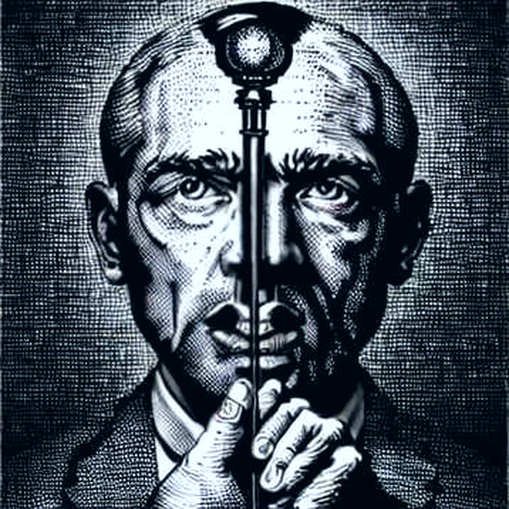
The Hidden Code of Concentration: Why Your Memory Chip ETF Is a Single Point of Failure
2026-08-16
The Empty Chart: When Deep Analysis Delivers Nothing but Noise
2026-08-12